
Snow, Rent & Energy: When Rent and Utility Bills Already Bite, A Little Kindness Goes a Long Way
Across Kansas City, many households are carrying heavy financial burdens long before winter arrives. In neighborhoods where housing costs consume more than 30% of a family’s income — the threshold HUD uses to define “rent-burdened” — even a small unexpected expense or weather event can become a serious challenge.
Now imagine experiencing a Missouri winter for the first time.
For families who are newly arriving in the U.S. or who have been displaced from their homes elsewhere, the learning curve can be steep: understanding heating systems, learning how to winterize a home, figuring out transportation in icy conditions, or simply knowing where to buy a snow shovel.
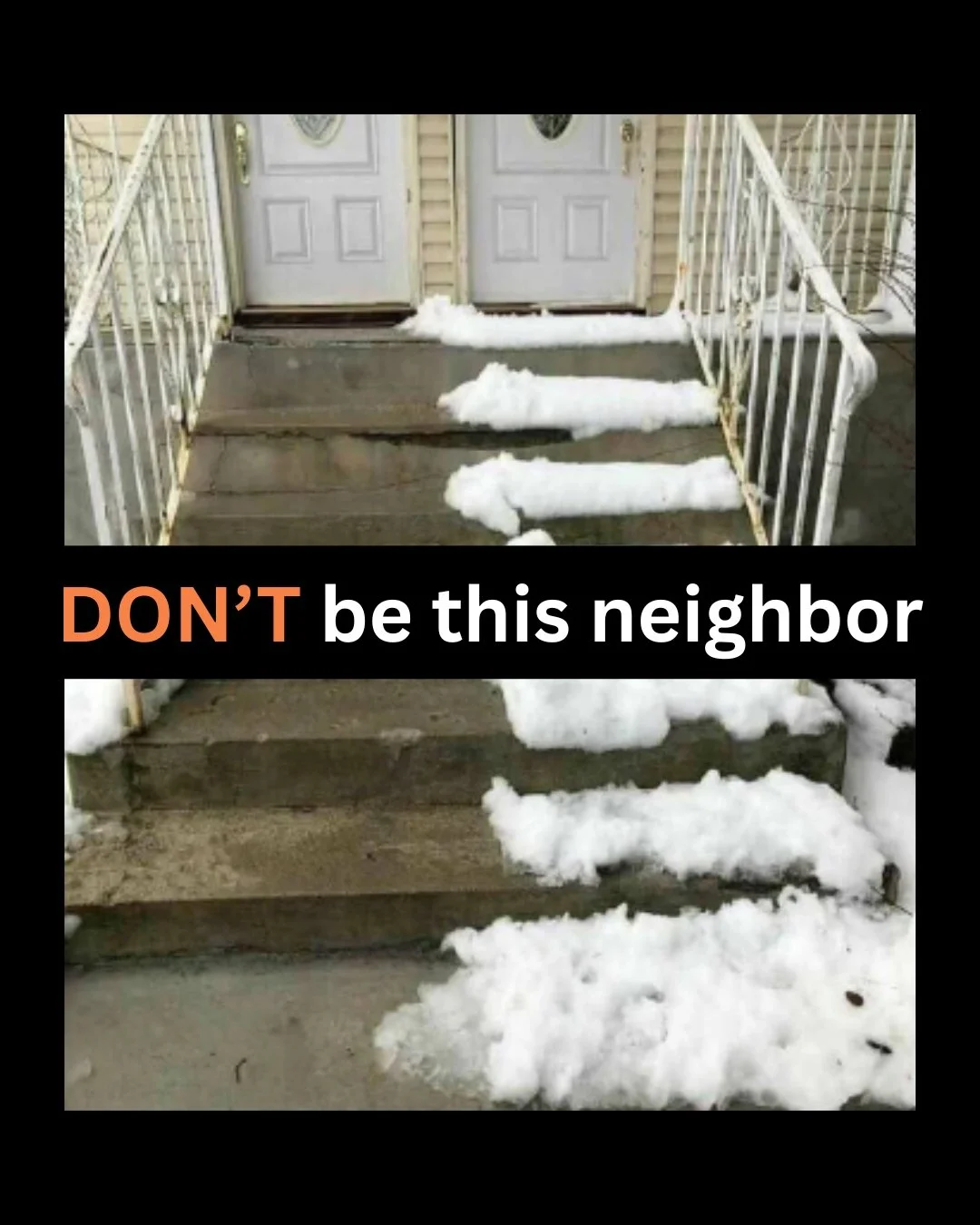
That is why a small gesture — a cleared walkway, a shared tool, or a friendly check-in — can make a real difference.
The Hidden Burdens Beneath the Snow
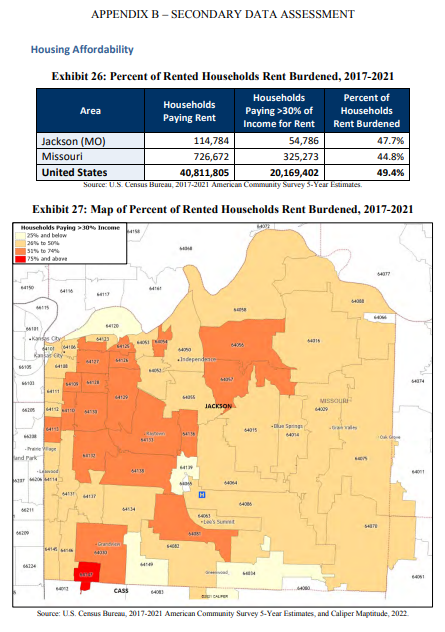
Rent burden in Jackson County
According to the Saint Luke’s East Hospital 2023 Community Health Needs Assessment, nearly half of renters in Jackson County are considered rent-burdened — and in several ZIP codes the percentage rises above 75%. When such a large portion of income goes toward housing, there’s little left for anything else.
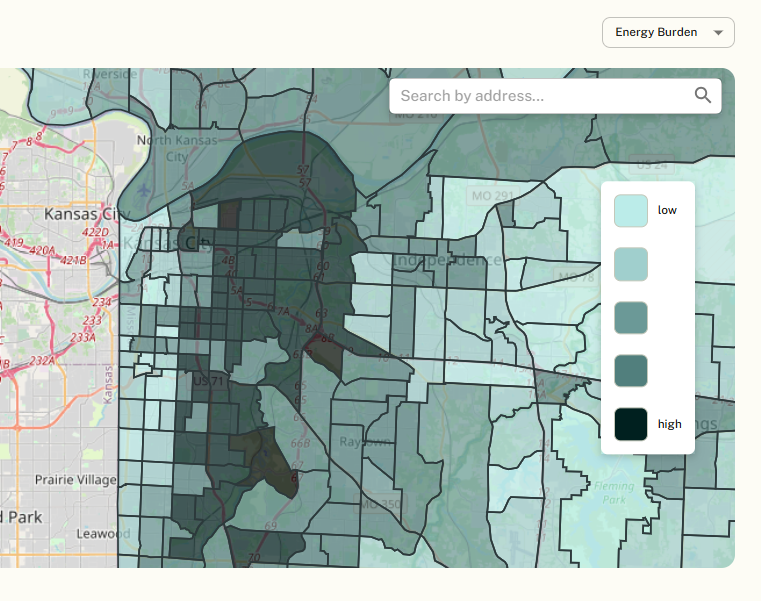
Energy burden often overlaps the same neighborhoods
A 2025 KBIA article highlights a new tool revealing where utility bills take the heaviest toll: the Missouri Energy Burden Explorer.
Energy burden measures how much of a household’s income goes toward electric and gas utility costs.
Neighborhoods facing the highest rent burden often face high energy costs as well — due to aging buildings, poor insulation, drafts, and outdated heating systems. Even an average energy burden of around 6% can place significant strain on low-income households.
Families rebuilding their lives face an additional layer of challenge
Data from From Struggle to Resilience: The Economic Impact of Refugees in America shows that families who have been displaced from their home countries often begin their first years in the U.S. with lower household incomes and limited knowledge of local housing systems.
When you pair this with high rent and high utility costs, these families often experience a triple burden:
High housing costs
High energy bills
Less familiarity with winter home maintenance, transportation, and local resources
For newly arrived neighbors — families who are rebuilding stability and learning new systems — winter weather stress can add yet another layer.
What This Has to Do With MITC
At Mercy in the City (MITC), we believe that housing is foundational to dignity, stability, and opportunity.
Our mission is to create affordable homes in Kansas City that prioritize sustainability and energy efficiency, especially in neighborhoods where families are disproportionately affected by overlapping housing and utility burdens.
MITC works to:
Reduce housing costs through affordability
Lower utility bills through energy-efficient design
Build neighborhoods where families can feel safe, stable, and supported
Promote environments where newly arrived or displaced families can rebuild their lives with dignity
When rent and energy costs strain a household, having a supportive community and a stable home can make all the difference.
A Winter Invitation to Kansas City Neighbors
As snow falls and temperatures drop, the simple act of helping a neighbor becomes more meaningful:
Clearing a walkway
Sharing a snow shovel
Checking in on someone who may be experiencing their first Missouri winter
Offering guidance on weatherizing a home or using local transportation resources
These small actions help families stay safe — and help neighborhoods grow closer, warmer, and more connected.
Kindness builds belonging.
Belonging builds community.
Community strengthens Kansas City.
A Long-Term Vision for a Better City
MITC is working toward a future where every family — regardless of where their journey began — can live in a home that is:
Affordable
Energy-efficient
Healthy and safe
Embedded in a welcoming community
Winter will always come. But together, we can make sure the burdens it brings do not fall hardest on those with the fewest resources.
Sources & Further Reading
“Data shows ‘energy burdened’ communities across Missouri,” KBIA, Feb. 6, 2025
https://www.kbia.org/kbia-news/2025-02-06/data-shows-energy-burdened-communities-across-missouriMissouri Energy Burden Explorer
https://app.power-d.city/dashboard/missouriSaint Luke’s East Hospital — 2023 Community Health Needs Assessment
https://www.saintlukeskc.org/sites/slkc/files/2025-02/SLE_2023_CHNA%20FINAL_11.9.23_web.pdfFrom Struggle to Resilience: The Economic Impact of Refugees in America
New American Economy, 2017
https://www.newamericaneconomy.org/wp-content/uploads/2017/06/NAE_Refugees_V5.pdf